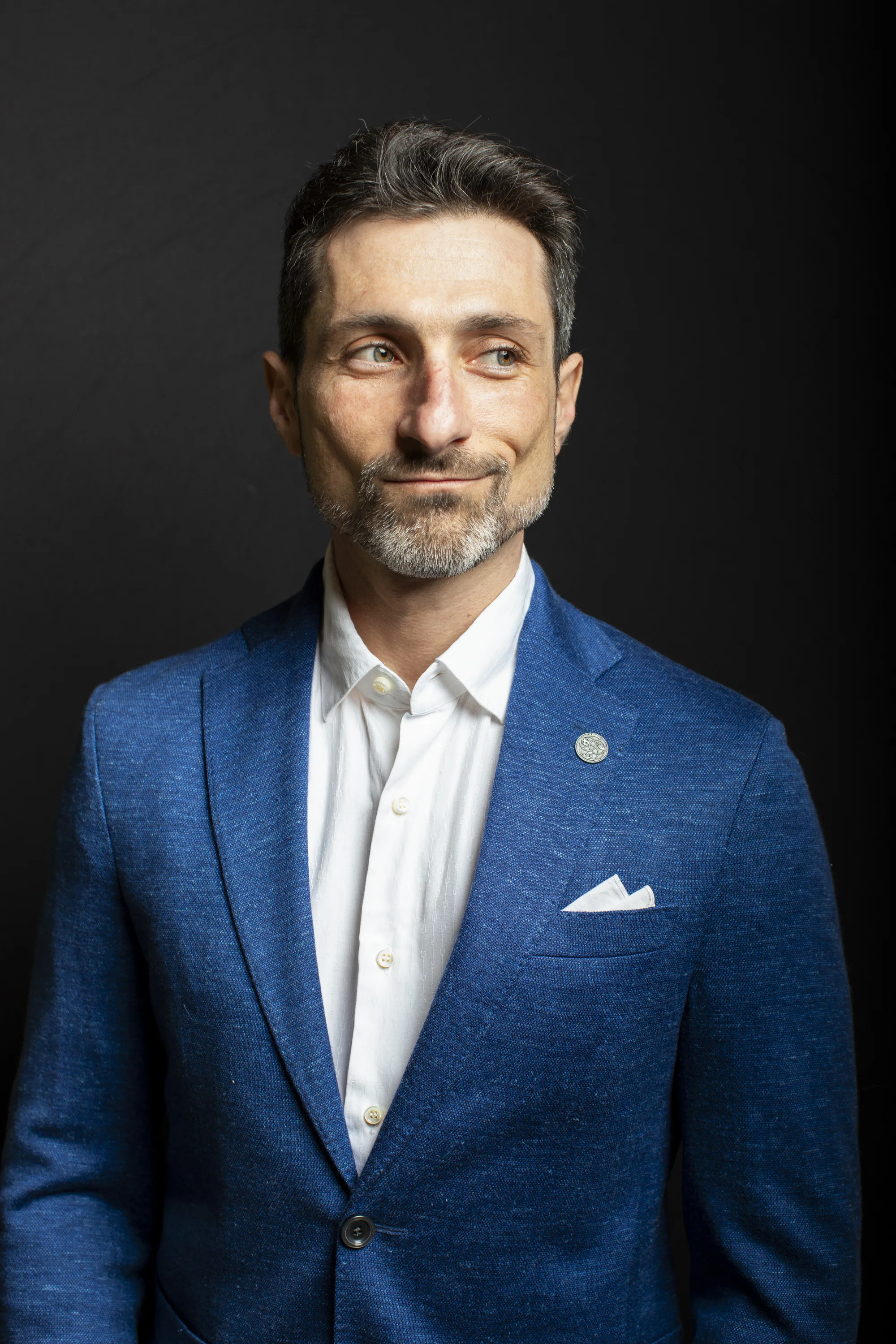

Henry Finkelstein
thrivinghenry
The Journey March 22, 2026

Thriving, This Time with AI

I'm the most inspired I've been in a decade.

That inspiration is directly traceable to the breath-giving power of Claude Code (or modern agentic harnesses, more broadly).

This site is an exploration of how to Thrive with AI, both at home AND at work.

I’m the most inspired I’ve been in a decade.The last time I felt this brilliant surge of inspired energy was 2015 when I created and produced a feature length circus named Cirko Telescoptiko. I’m also excluding my year earning my Sloan Fellow degree at Stanford Graduate School of Business. That year was incredible in so many expected and unexpected ways, among which was the built-in ephemerality of the experience.

Those who know me well know that I’m not prone to hyperbole, and I’m typically reserved in my praise (especially of software generally and AI specifically). So I measure my words carefully when I proclaim:

Claude Code is the greatest invention for cognitive work since computers or the printing press.To be more precise: agentic harnesses of frontier reasoning large language models at parity or greater than Opus 4.5. I appreciate there are good reasons for vendor-agnostic approaches. That said, I have the deepest respect for Anthropic’s leadership, and the Claude Code team specifically, and their product is what I use every day.

I’ve been working 50+ hours a week in Claude Code on personal and professional projects for ~9 months, and I’ve accomplished things I couldn’t have imagined a few short months ago. I’ve radically accelerated AND improved my level of excellence at work AND at home. I’m much more dialed in my relationships, my physical health, my intellectual rigor, and my progress on projects that actually matter to me.

Simply put, I’m Thriving more than ever before. And I’m just getting started.

I’m rebooting this website into a virtual salon and public town square to explore how to use AI to Thrive across two lanes: @Work, where I’m crafting agent-native GTM at an AI company,Agent-native Go to Market (GTM) means building a new paradigm for how a company organizes its marketing, sales, customer success, customer support, biz ops, and rev ops functions to harness the fullest capacity of agentic workflows. I work at Coval, an evaluations and observability platform for conversational AI agents. It’s turtles all the way down. and @Home, where I’m applying these same tools to my family, my marriage, and myself. I’m building for live events, asynchronous discourse, and a community exploring how AI can serve what matters most.

I’m not that kind of tech bro

We but mirror the world. All the tendencies present in the outer world are to be found in the world of our body. If we could change ourselves, the tendencies in the world would also change.

~Mahatma Gandhi

I’m living at the epicenter of the AI boom, and I spend most of my waking hours thinking about and working with AI. That also means I’m breathing all the digital exhaust of my AI-powered engine of discovery (and curated echo chamber). I offer my admittedly biased observations as a sociological data point from the eye of the storm.

The caricature of social discourse about gen AI is the Camp of Inevitable Doom (AI will steal all the jobs and paperclip all the resources!!) vs. Camp of Techno-utopia (AI will solve climate change and cancer, make everyone rich, create infinite resources, and cure the greatest blight humankind has ever known: bloated SaaS!!). For those of us at the front lines building, I’m surprised by how little we talk about any of that. More often, we’re talking about the latest tool or library that can enable some new cool functionality.

I’m not qualified to calculate a probability of doom (nor one of utopia).

The only thing I’m qualified to share is my experience + what’s working for me and why. Hopefully some of it resonates with you too.

When AI conversations turn lofty and theoretical, I often invoke the metaphor of hammer as a multi-tool. With a hammer I can build the most practical, utilitarian home; I can craft the most elegant, whimsical art; or I can do real damage real fast. Same exact tool, different purpose and intent. One important extension of the metaphor: AI is a tremendous force multiplier that amplifies the practitioner’s intent, benevolent, unconscious, or nefarious.

So I’m definitely a tech bro, but I’m offering a new angle on the conversation: I’m a techno-pragmatist. We continually surprise ourselves with the huge problems we solve, and create, with advances in sciences, maths, and technology. We can absolutely create things that destroy us, and we can also create things that support our collective Thriving. I’m much more interested in the latter.

So I’m very happy to be the tech bro obsessed with using AI for Thriving, at home and at work.

Tough job, and someone’s got to do it.

Why Thriving with AI, and why now

The future is already here — it’s just not evenly distributed.

~William Gibson

Something feels different to me. Like that titillatingly electric feeling when a crowd is properly dazzled by a magic trick. It started around November 2025 with the launch of Anthropic’s Opus 4.5.

At that point, and increasingly since, I noticed that my imagination and intellect were the only gating factors of excellence. The models were smart enough to actively help me with high caliber output, thought partnership, and guidance in 95% of my daily domains. I can’t think of a single thing I care about that they can’t help me with, given enough time to diligently pursue the topic.

And almost anyone who can afford internet + $20USD/month has access.I recognize there are billions of people who do not meet this criteria. For better or worse, their lives will also be impacted by the advent of this technology, both in the acceleration of their access as well as knock-on effects from social and ecological impacts from others who have access. I can’t exactly quantify, but I’d estimate that’s somewhere around 4 billion people, or about half the global human population.

Let’s pause for a beat on that: 4 billion humans can turn on an ultra-mega power tool to help them achieve almost anything they are willing to honestly and diligently pursue. It can meet them wherever they are, in dozens of languages, and organically shape itself to how they think and perform through simple conversation.

It’s like the world’s most poly of polymaths, with significant depth in many wide-ranging domains, is down to collab at any time of day or night on any project with any degree of seriousness or play. Holy wow.

So where do I point the inspiringly powerful laser beam that is orchestrated agentic harnesses with SOTA models? Thriving, of course 😀. I know, I’m so predictable.

Sure, it can’t make me regeneratively organic certified coffee with a precision burr handgrinder in a glass aeropress pour over. And I get that it’s exhausting to keep up. The bleeding edge from three months ago is already dull and deprecated, and it’s hard to know who to trust and what’s hype. But right now is a truly special inflection point because of the nexus of breadth, depth, and accessibility of a breathtaking human invention. Plus, the choices we make right now have tremendous compounding forces as workflows become recursively self-improving.

AI tools are radically reshaping the future. I want to bend the discourse toward pragmatically approaching the question: “How can I use AI to Thrive?” I have a good idea of the world I want to live in, and there has never been a better time in the history of all mankind to pursue my life’s work.

Beyond the macro now, my micro now is my son. If I spend the next few decades building this, maybe just maybe, he and his peers will have a head start on their own Thriving paths.

Curating an anti-slop, anti-hype safe space for discovery and discourse

Information is a source of learning. But unless it is organized, processed, and available to the right people in a format for decision making, it is a burden, not a benefit.

~William Pollard

Reading and talking about AI is difficult because of the flood of AI slop and hype. Especially for those just getting started, it can feel overwhelming or impossible to distinguish signal from noise.

There are very real, and very reasonable, concerns about the social and ecological impacts of generative AI. There are also very practical, and powerful, excitements about the potential of AI to positively reshape legacy institutions like science, medicine, education, and work while opening hitherto inconceivable new doors.

To navigate the nuances of the jagged frontierThe term “jagged frontier” means that AI advances in unpredictable and uneven ways. This phrase was first introduced by a team of researchers at Harvard + BCG + Ethan Mollick at Wharton in a 2023 paper. Mollick later wrote about this paper and its implications on his substack. He recently updated his concept in a Dec 2025 post maintaining the frontier continues to be jagged, but it’s getting harder to find tasks AIs can’t do well. of using AI, there needs to be a space for honest discourse. Where are the booby traps and where are the compounding accelerators? What can we do today to shape the world we want to live in tomorrow?

My commitment to my readers is to be explicit about what is evidence-based, what is speculative based on evidence, and what is my personal opinion. This allows us to be clearer, kinder, and more productive throughout our exploration.

I value intellectual honesty, and to me that is grounded in four principles:

Evidence comes in many forms and weights

I’m 100% committed to an evidence-based discourse. That means something very specific to me.

In many communities, “evidence-based” has a reductive meaning of only randomized controlled trials or some other arbitrary squiggly outline of Real Science. I uphold a significantly more expansive take on what constitutes “evidence.”

I welcome evidence from the broad spectrum of human experience: scientific, philosophical, spiritual, and beyond. Though I’m interested in diverse signals, not all evidence is created equal. Part of the burden of widening the aperture is being explicit about how much weight I put on that evidence in my decision-making process, and why.

For example, randomized controlled trials have been a brilliant innovation for removing statistically confounding variables from experiment design. But they introduce other problems derivative of the format itself: funder + funding bias, acute + short horizon interventions, and reductionism vs. systems-orientation. Similarly, ethnobotany has tremendous wisdom to offer while recognizing that ancient healers regularly peddled poisons we only understood fully centuries or millennia later.

Inherently subjective domains such as individual experience and belief systems are also valid evidence. I strongly support cultivating an honest philosophical discussion about the morality and ethics of how we use and live with AI.

Any claim worth making is worth citing. Once the source is visible, anyone can evaluate the rigor of the procedure and the confounding factors at play.

Explicit evidence builds bridges and inspires trust. It’s a difficult, but critically important, standard.

Best available information, not perfect information

With seemingly infinite sources and threads of evidence, analysis paralysis is a real risk. I crave all the evidences to optimize my decisions and, by definition, will never have them all. Even with the best intent and the best thought process, I could yield a technically “wrong” answer when I uncover more information.

Being right today but wrong tomorrow has to be OK.

This is a feature, not a flaw. Articulating conclusions with the best available information today allows us to trace the reasoning and update when more evidence is available tomorrow. We should all expect to be frequently proven wrong, and that’s beautiful.

Normalizing and celebrating changing our minds when the evidence changes is mandatory for a healthy and civil discourse in society.

Admit mistakes and realign accordingly

Even within the scope of best decision with best evidence, I will stumble into mistakes of execution. I may have limited awareness of my impact. I may have limited capacity for my diligence.

My commitment is to be explicit when I make a mistake, including how that mistake was made and what I’m changing to ensure it doesn’t happen again. This is standard practice for retros in system-critical infrastructure incidents. I’m inspired by the rigor of that practice.

I can’t think of anything more critical to Thriving than my systems of meaning- and decision-making. Building self-annealing processes to reinforce those systems begins with admitting mistakes.

Curate, distill, and challenge

Wikipedia lists over 200 cognitive biases and each of them has the potential to cloud judgment and negatively impact Thriving.

On top of these intellectual failings, addictive algorithms have inspired a wave of increasingly polarized content. Now, AI is amplifying those patterns with meaning-shaped black holes of attention and slop.

The internet has a massive recency bias, and it’s eroding our ability to distinguish ideas that stand the test of time from fads that come and go with every passing hype-sical tweet.

Intellectually honest discourse requires an uncompromising caliber of curation to ensure only high signal sources make it past the filters. To minimize potential biases, I’ll constantly curate, distill, and challenge the information that forms my corpus.


Reason #7832 of why I’m so inspired right now is that, architected properly, modern LLMs can be incredible partners in sourcing, curating, and distilling information into claims. Scorecards can add rigor to evidence signal purity and strength, and applying multiple frameworks with uniquely AI diligence can radically decrease bias and blind spots. All at a blistering speed and unprecedented scope.

I commit to the first principles of intellectual honesty and (expansive) evidence-based decision-making, recognizing that means I’ll make plenty of mistakes along the way.

Hopefully my incredibly handsome faceplants can scout the potholes for others walking their own path.

Designing for uncertainty and rapid change

You never change things by fighting the existing reality. To change something, build a new model that makes the existing model obsolete.

~Buckminster Fuller

I broadly group the emerging patterns from the “now is different” sensation as agent-native. And it impacts just about everything.

I’m a big fan of the courage and diligence of build-in-public projects. In that spirit, I’ll build my thrivinghenry website and my offerings in public. That means highlighting hypotheses, what I learn, and what changes I make along the way. I expect a steep learning curve, so buckle up for a lot of rapid change in the next 12-18 months.

Here’s a snapshot of the six principles of experience design driving everything I’m building, from this website to the newsletter to events, skillz, micro-apps, and charmingly witty asides.

Agent-native

Build with and build for AI agents as much as for humans. A corollary of agent-native is eval-first, because the fastest way to achieve high performance is by articulating and testing for high performance.

Pursue invitational excellence

Commit to this Code of Excellence in every domain and every pursuit. When this energetic signal is pure enough, it will invite individuals to level up in ways they didn’t know they could.

World’s most interesting dinner party

Like “Music,” Thriving is a fascinating topic because it has so many different forms, norms, theories, and applications. Some aspects are truly universal while others are deeply personal. Interacting with thrivinghenry should feel like an ongoing, asynchronous salon with brilliant people talking about fascinating things in telescoping depth. Interesting, warm, and always welcoming to jump in and play along.

Show the journey

Some of the value is my final product. Most of the value is the thought process, specific step-by-step prompts, and dead ends I map along the way. The more I share my failures along with my successes, the more I normalize the value of continuous learning.

Remove Thrive blockers

Thriving is our natural state, and we have three kinds of blockers that get in the way: don’t know how, don’t have practice, don’t have community to sustain the practice. My offerings seek to systematically remove each of those three blockers in effective and creative ways.

How I do one thing is how I do everything

Balance urgency with precision and quality. I’d rather ship one well-done thing than six half-done things. Work smarter, not harder, to create compounding virtuous feedback loops. Every big idea and micro detail is a reflection of who I am and what I have to offer.


Together with the four principles of intellectual honesty, these ten first principles are broad enough to leave room for exploration but specific enough to act as a standard by which I evaluate alignment.

The internet will never be the same. My vision for this website is a living exploration of the emerging palette of new ways to interact, connect, and collaborate in a world where AI agents are first-class participants.

And I’d like to take a moment to honor that this new paradigm is a Big Change. That can feel hard and scary, particularly for those who were comfortable before and don’t understand why things have to change at all. The new paradigm is weird and unpredictable, which means unknown changes will affect many people in inconceivable ways. That level of uncertainty can feel very unsettling.

I have compassion for those who will be impacted, and part of my mission is to build support structures for individuals to survive and Thrive with the changes wrought by advancing AI. It’s not easy, but we have to neighbor for each other in this great moment of the unknown.

Are you just warming me up to sell me snakeoil supplements?

We live in the Internet age. Everyone wants clicks. Clicks are what sells.

~Trevor Noah

Definitely not, unless … you are willing to buy some.

I feel an ethical tension worth calling out from the get-go.

I want to devote my life to, and make my daily full-time job, establishing the Global Institute For Thriving (GIFT). To accomplish that life ambition, GIFT needs to pay me a Thriving wage so I can support my family. Where I live in the Bay Area, that’s a lot of money.

I’ve watched other online creators navigate their desire for financial resources by introducing sponsorships and advertisements to ensure “always free” content. In the end, I find myself discounting their credibility because of the real and perceived conflicts of interest.

Other creators find greater alignment with subscriptions or fees related to thought leadership (like Substacks) or products built (like Every). This offers a more direct exchange of value that fuels positive feedback loops of quality and consistency.

So yes, I’ll be offering high-value ideas, products, and/or experiences in exchange for dollars. In fact, the first of these will be a live, virtual event called Claude Code for Non-Coders Camp.

For every thing I charge for, there will be many many more things forever free.

I have a 100% money-back guarantee, no questions asked, on every free thing I ever sell.

How you can earn your official Thriver merit badges

You can’t yet, but wouldn’t that be fun?! Maybe sometime I’ll dream up a gender-neutral ThriverScouts program for kids and adults to pursue life quests that support their individual, family, or community Thriving.

Until then, sign up for the newsletter, follow along on my LinkedIn, and come play. I’ll be at this for the next 45 years.Five years ago, I wrote a 50-year master plan for my life. I’m currently in Year 6, Practice. AI is making experimenting wildly more accessible and exciting than I ever imagined when I wrote the plan. Plus, it’s just so much fun!

~h